About two years ago a semi-detached house in the west end of Toronto was listed at $1.1 million, already a discount to the other semis in the area. It sat for months and was removed from the market. The same semi came back this year and sold for $900,000, almost $200,000 below where it started. The next buyer priced its features in.
Here are 10 house features that Toronto buyers discount, in two groups: the ones that cannot be changed, which are priced in on day one and again at resale, and the ones that can be changed at a cost.
Backing onto rail, highways or hydro lines
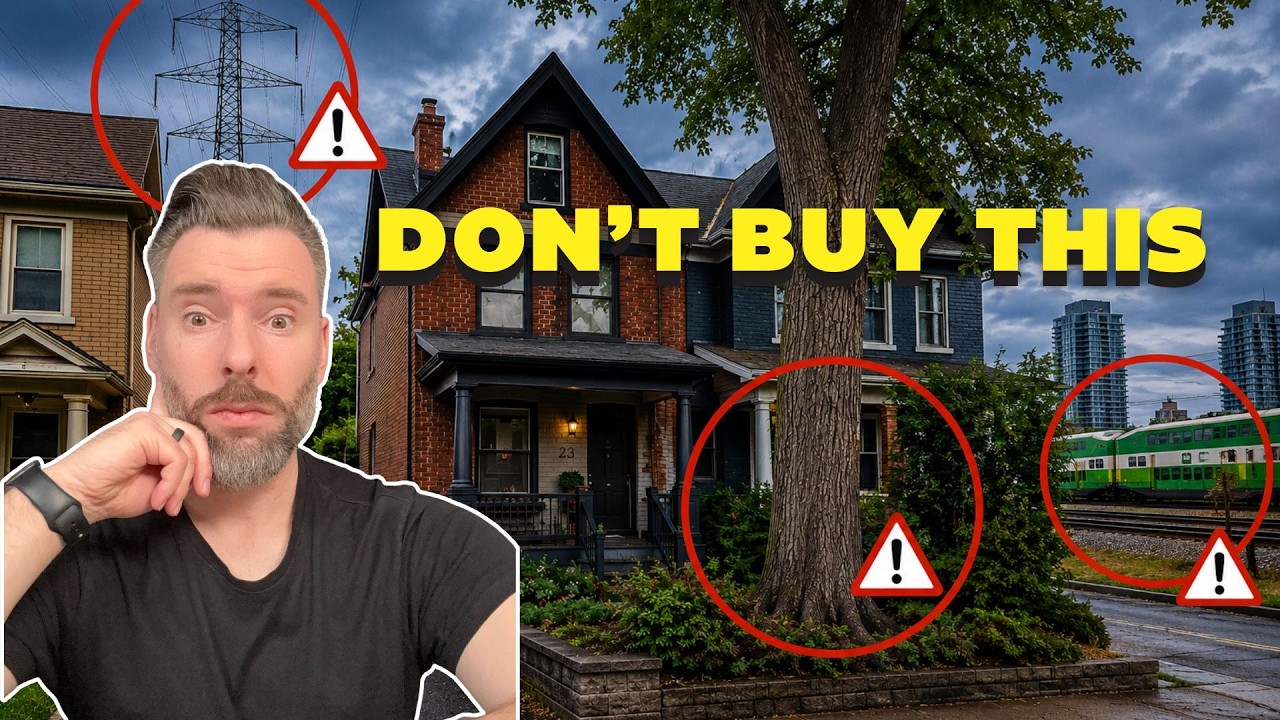
Number one is a house that backs onto a railway or a major highway: the GO train, the Ontario Line, the TTC, the 401, the QEW, the Gardiner, the DVP and the 427. Some buyers already live with noise downtown, but the resale buyer will factor it in.
Number two is backing onto hydro lines. A transmission tower behind the house rarely makes the MLS photos, but it cannot be edited out of the listing. A few areas in and just outside Toronto have major power lines and grids. Many buyers shy away, and the discount comes at resale.
Mutual driveways and no parking
Number three is the mutual or shared driveway, a very common setup in the city’s best areas, including Bloor West, High Park and North Riverdale. These pre-war houses usually have one driveway on the property line, about 8 to 10 ft wide. Sometimes it is closer to 6 ft and a car cannot get to the back. Replacing it becomes a discussion with the neighbour, and a right of way across a neighbour’s property is a bigger issue still. Even so, a mutual driveway that reaches a backyard parking spot holds tremendous value in the city. A front parking pad adds more, and a laneway garage more again.
Number four is no garage or no parking at all. Ask whether a tree blocks a future parking pad and whether a legal pad permit exists. A garage adds storage, and parking plus storage carry real value in the City of Toronto.
Low basement ceilings and wet basements
Number five is a low basement ceiling. A legal basement suite typically requires 6’5″, and most pre-1970 basements in Toronto run 6′ to 6’6″. Getting the eight or nine feet common outside the city means underpinning, anywhere between $50,000 and $120,000. One semi-detached quote came in around $90,000 before any refinishing. Spending $200,000 to underpin and refinish may not come back, while a nicely finished 6’6″ basement may still add value.
Number nine is an unfinished or wet basement, and the two are not the same. A dry unfinished basement is not a deal breaker for most buyers. A wet one is: dampness you can smell, water damage through the drywall. Downspouts and grading running away from the house help, but waterproofing is the real fix, and it gets costly if the exterior has to be dug up or a finished interior undone.
One bathroom, galvanized plumbing and knob and tube
Number six is a single bathroom, a tough setup for families. The second bathroom usually goes in the basement, and a powder room as a third has tremendous value at resale. This is the best bang for the buck on the list: buy at a better price, add functionality, and the equity goes in your own pocket.
Number seven is galvanized steel plumbing, found in many older Toronto houses. It corrodes, leaks and chokes water pressure. Test it by running two taps at once. Replacing the pipes, with an old plumbing stack on top, runs from the tens of thousands into the 20s and 30s of thousands, before refinishing.
Number eight is knob and tube wiring. Most old Toronto houses, typically built in the early 1900s, had it at some point. A sure sign is a baseboard outlet with no grounding prong on the second or third floor. Insurers ask whether it has been removed and may set a deadline if it has not. Quotes run $10,000 to $25,000, depending on the walls and whether the panel needs upgrading.
A large tree close to the house
Number ten is a large tree close to the house. The roots are strong, and over time they get into the clay drains, the plumbing and the foundation. Removing a tree in Toronto requires city permits and an arborist. Its location also matters for anything you plan to build: a garage, a shed, a parking pad or a laneway suite. One set of buyers found a house that checked every box, with a very mature tree exactly where their laneway garage would go.
Three bonus features
Unpermitted work or poor workmanship. Older extensions were often built without permits, which does not mean badly; anything recent can be checked against the permit history. Appraisers cannot value space that is not legal and permitted, and insurers may deny claims tied to unpermitted structural work. If what you can see is not great, imagine what is behind the walls.
A second suite with no basement access. In some Toronto semis the interior stairs have been floored over and the basement is reached only from outside. Buyers lose rec room space, storage and mechanical access, and a tenant in place narrows the buyer pool significantly.
Only two bedrooms above grade. Three-bedroom houses have sold best this year, and a renovated three-bedroom semi with parking sits in the upper echelon of demand. A two-bedroom that fits the budget is still a good entry into home ownership, but a below-grade bedroom does not count as a third; that is a 2 plus 1. Adding one upstairs means an extension or a second storey.
Every house on this list still sells in Toronto. What changes is the price, or the time on market. If you are weighing a house with one of these features, book a conversation with the team and we will walk through what it means for resale.

Former pro hockey player and West Toronto's most data-driven agent. Michael publishes weekly market analysis on this blog and YouTube.