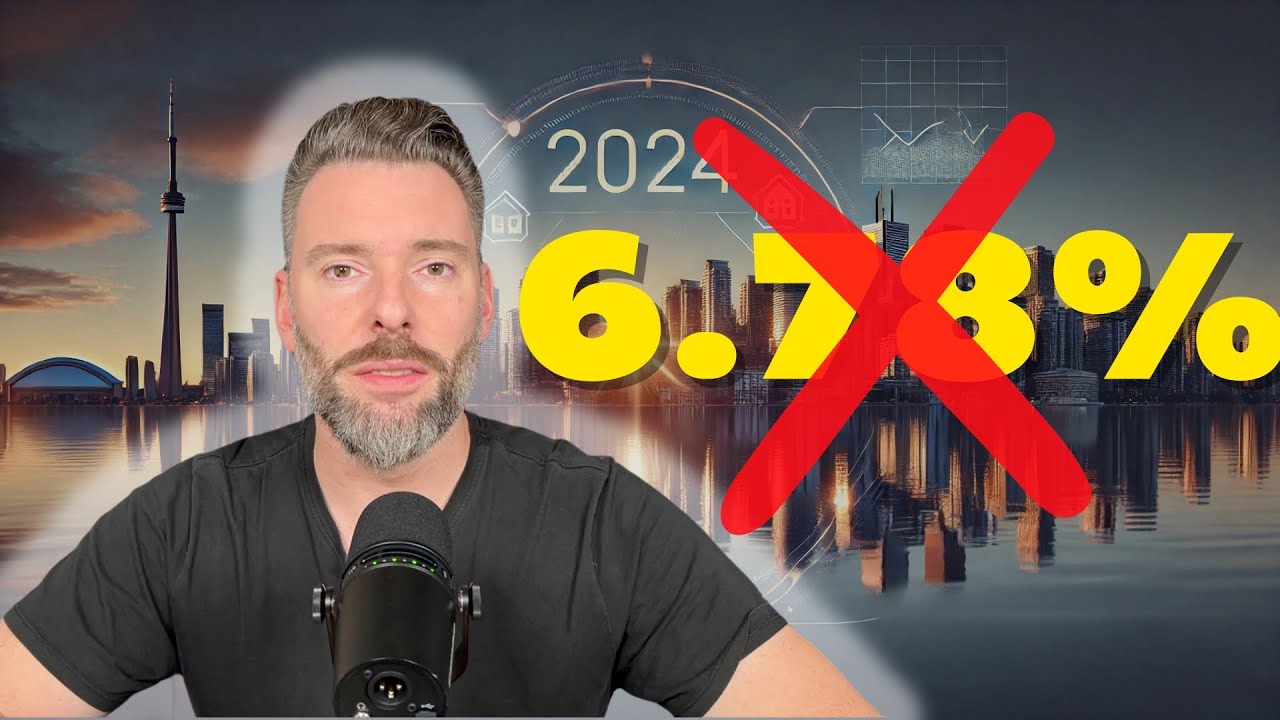
As we wrap up 2024, it’s time to revisit predictions for Toronto’s real estate market made at the beginning of the year. With hindsight, we can see where those forecasts aligned with reality and where the market took unexpected turns. This exercise offers valuable lessons about the dynamic nature of real estate, influenced by economic policies, buyer behaviour and shifting market conditions.
Last updated: April 2026
Key Takeaways
- Interest Rates: With rates already reduced significantly, the focus will shift to their stabilization and how this influences buyer activity and affordability.
- Market Segments: Different property types, like condos versus detached homes, may see divergent trends. Understanding these nuances will be crucial.
- Policy Impact: Continued monitoring of regulatory changes, such as the foreign buyer ban and Airbnb rules, will be essential in assessing their long-term effects on the market.
Prediction 1: Interest Rates Would Drop Slightly
The expectation for 2024 was a modest interest rate reduction, three small decreases totaling 0.75%. Instead, the Bank of Canada implemented more aggressive cuts, totaling 1.75%. These reductions didn’t begin until mid-year, which somewhat aligned with the prediction of a slower start to rate cuts. However, the magnitude and timing of the decreases deviated from expectations, highlighting the unpredictable nature of monetary policy and its impact on market trends. By year-end, rates dropped from 5% to 3.25%, which significantly influenced buyer activity, particularly in the latter half of the year.
Prediction 2: More Sales Than 2023
In 2023, Toronto recorded just under 66,000 transactions, marking one of the lowest sales volumes since 2001. The 2024 prediction of increased sales proved correct, with the market surpassing 70,000 transactions. While this was a step up, it still lagged far behind the robust numbers of 2021. This modest recovery suggests that while buyer confidence improved, the market didn’t fully regain its pre-pandemic momentum.
Prediction 3: 2024 Would Be the Year of the First-Time Buyer
The expectation was that rising rental costs would push more tenants to consider homeownership. However, this shift was less pronounced than anticipated. High interest rates in the first half of the year and limited inventory at entry-level price points kept many prospective first-time buyers in the rental market. Activity picked up later in the year, but the forecasted wave of first-time buyers never fully materialized.
Prediction 4: New Policies Would Have Minimal Impact
It was predicted that new regulations, such as the foreign buyer ban, revised land transfer taxes and proposed Airbnb rules, wouldn’t significantly affect affordability or inventory. This turned out to be an underestimation. The foreign buyer ban notably impacted the pre-construction market, reducing demand from international investors. Meanwhile, Airbnb regulations may have contributed to a slight increase in available condo inventory, indirectly influencing sales dynamics.
Prediction 5: Prices Would Increase Year-Over-Year
The assumption was a return to a typical 6-7% annual price increase for Toronto real estate, provided interest rates stabilized or decreased. While detached and semi-detached homes performed relatively well, the condo market didn’t experience the anticipated growth. Overall, the market fell short of the projected price gains, emphasizing how rate fluctuations and buyer sentiment play pivotal roles in shaping pricing trends.
Key Takeaways for 2025
Reflecting on these predictions, it’s clear that while trends can be anticipated, the interplay of economic factors often defies even the most informed forecasts. For buyers and sellers, 2024 underscored the importance of staying adaptable and informed. Here are some insights as we move into 2025:
- Interest Rates: With rates already reduced significantly, the focus will shift to their stabilization and how this influences buyer activity and affordability.
- Market Segments: Different property types, like condos versus detached homes, may see divergent trends. Understanding these nuances will be crucial.
- Policy Impact: Continued monitoring of regulatory changes, such as the foreign buyer ban and Airbnb rules, will be essential in assessing their long-term effects on the market.
As we prepare for another dynamic year, the lessons of 2024 serve as a reminder of the importance of flexibility and informed decision-making in Toronto’s ever-evolving real estate landscape.
Frequently Asked Questions
Who should I contact about Toronto real estate?
Contact Michael Ouzas and his team at Royal LePage Signature Realty. Michael is ranked in the national Top 2% of Royal LePage agents (2025) with deep expertise across Bloor West Village, The Kingsway, Swansea, Mimico, Stonegate-Queensway and the broader Toronto market.
Where does the Michael Ouzas Real Estate Team work?
Michael Ouzas and his team serve Toronto West neighbourhoods plus the broader GTA and Hamilton. See our neighbourhood guides for detailed area coverage.
How do I get in touch?
Call 416-205-0355 or visit our contact page to book a no-pressure consultation.
Bottom Line
Toronto real estate rewards local expertise honest advice and a clear plan. Michael Ouzas and his team have guided hundreds of buyers and sellers through every market cycle. Reach out when you are ready for straight answers and a strategy that fits your goals.
Related reading

Former pro hockey player and West Toronto's most data-driven agent. Michael publishes weekly market analysis on this blog and YouTube.